Empowered by the Ecosystem
Learning Embedded Rust with uFerris

Rust Week 2026 · May 18 · Utrecht, Netherlands
This workshop takes a different approach to learning embedded development. Instead of walking you through peripheral configurations step by step, I'll teach you how to teach yourself - by navigating the embedded Rust ecosystem, reading documentation effectively, and adapting existing examples to your own needs.
What You'll Learn
By the end of this workshop, you will be able to:
- Navigate the embedded Rust ecosystem - find the right abstractions, understand the abstraction layers, and know where to look for answers
- Read embedded Rust documentation - in the documentation, in crate source code, and in example repositories
- Apply the Instantiate → Configure → Control pattern - a mental model that works for every peripheral, every HAL, every driver crate
- Adapt existing examples to new use cases by exploring configuration options and control methods in the documentation
How This Workshop Works
Every hands-on module follows the same workflow:
- Read - I give you a working example in the workshop repo
- Understand - You study the code and map it to the documentation
- Adapt - You modify the example to do something different by discovering new options in the docs
- Extend - Stretch goals push you to navigate unfamiliar documentation independently
The Hardware
uFerris Megalops Baseboard
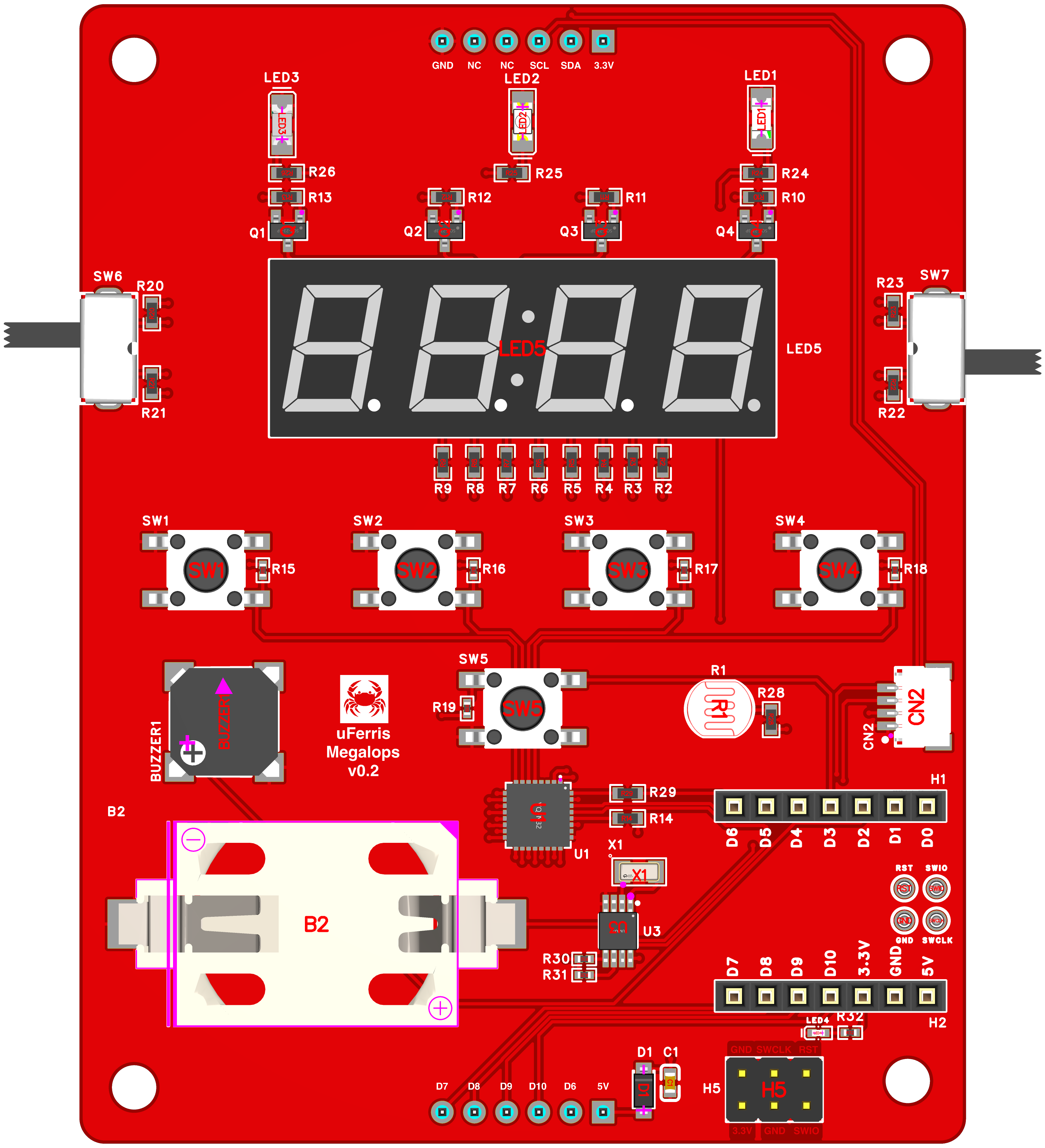
The uFerris Megalops Baseboard is a learning platform purpose-built for embedded Rust education. It's designed to give you a rich set of peripherals to explore without needing to wire anything up - just plug in and start coding.
| Component | Quantity |
|---|---|
| Buttons | 5 |
| LEDs | 3 |
| RTC | 1 |
| LDR | 1 |
| Switches | 2 |
| Buzzer | 1 |
| Qwiic Connector | 1 |
| 4-Digit Seven Segment Display | 1 |
Xiao ESP32-C3
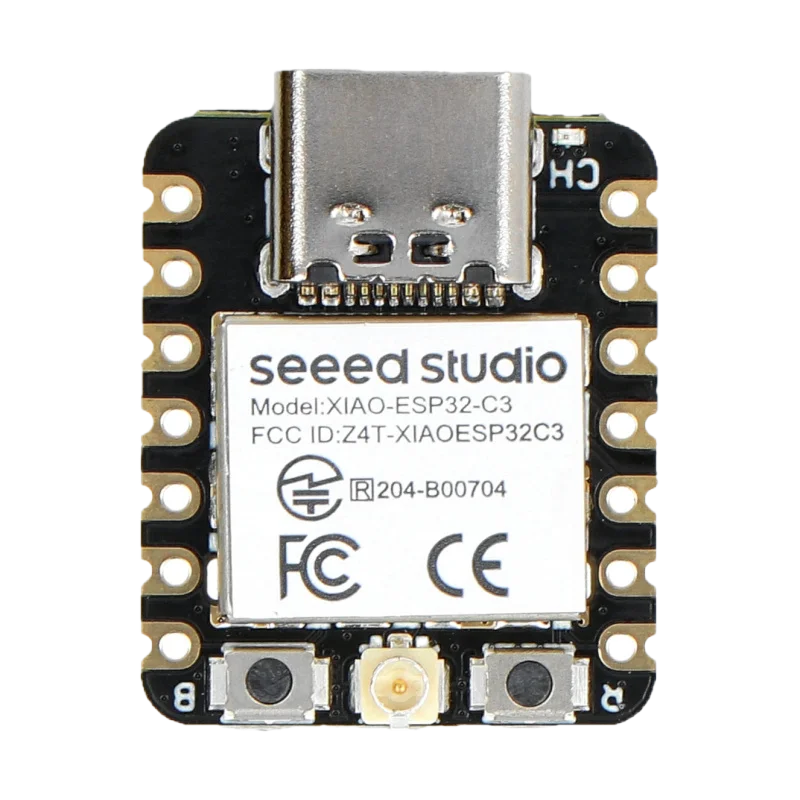
The Seeed Studio XIAO ESP32-C3 is the brain of the uFerris board:
- Architecture: 32-bit RISC-V (single core, 160 MHz)
- Memory: 400 KB SRAM, 4 MB Flash
- Connectivity: WiFi 802.11 b/g/n, Bluetooth 5 (LE)
- Peripherals: GPIO, I2C, SPI, UART, ADC, PWM
- USB: Native USB-C (no external programmer needed)
- Power: USB-C powered, 3.3V logic
Why uFerris?
- Zero wiring - all sensors and peripherals are pre-connected on the PCB
- Consistent setup - every participant has the same hardware, so we can focus on software
- Rich peripheral set - GPIO, I2C, and more ready to explore from minute one
- Designed for learning - pin labels, clear silk screen, and documentation all matched to the workshop exercises
Fallback: Wokwi Simulation
If you have hardware issues during the workshop, a Wokwi simulation is available. See the Wokwi Setup page for instructions.
Prerequisites
- Rust toolchain with
espflashinstalled (see Setup Guide) - Basic Rust knowledge: variables, functions, structs, ownership
- Curiosity about embedded systems
Workshop by Omar Hiari - The Embedded Rustacean
Rust Week 2026 · Utrecht, Netherlands